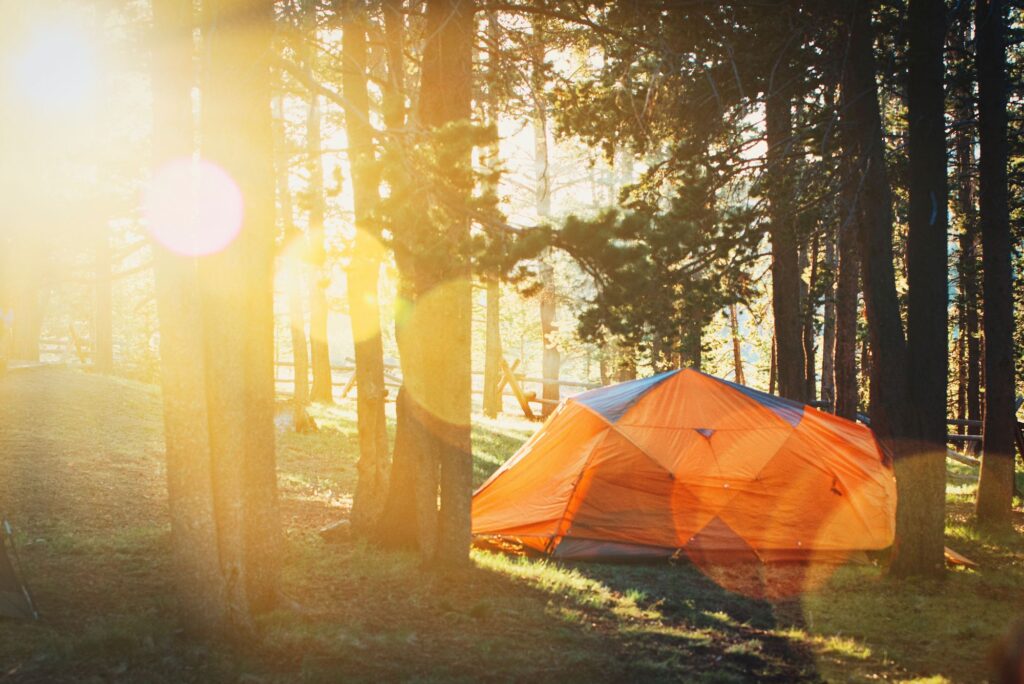
We spoke with forestry PhD candidate and BC Registered Professional Forester Ira Sutherland about respecting and caring for the forests around us as we go camping this spring and summer.
May 18, 2023
UBC Faculty of Forestry professor Richard Hamelin explains how climate change continues to plague the real Christmas tree market and what should be considered for improving the worldwide growing supply chain shortage.
Dec 9, 2022
As a new wildfire season approaches, many Canadians are reflecting on the devastating losses of last season, and considering what they can do to protect themselves and the places where they live.
Apr 26, 2022
Thirty athletes from the U.S. and Canada will compete in the seventh annual Great Canadian Classic, an annual logger sports competition that celebrates B.C.’s forestry heritage.
Mar 5, 2020
Despite 140 million years of independent evolution, two types of coniferous trees use the same small set of genes to adapt to varying climates, according to researchers.
Sep 23, 2016
Genomics is behind an innovative new method for breeding trees that can adapt to our changing world.
Dec 23, 2013 - by Maura Forrest
Lori Daniels explains how forest fires can contribute to landscape diversity.
Jul 29, 2013
Ashley Dobko is part of a group of tree detectives looking to unlock the secrets of B.C.’s old growth trees in an effort to protect them.
Jul 15, 2013 - by Heather Amos
With the same technology that carries tunes through the airwaves into your old AM/FM radio, Stavros Avramidis decontaminates wood. It’s a new solution to an old problem.
Jun 17, 2013 - by Heather Amos
Canadian and Swedish scientists today released genome sequences of two of the most economically important forest trees in the world.
May 22, 2013
The genome of the mountain pine beetle – the insect that has devastated B.C.’s lodgepole pine forests – has been decoded by researchers at the University of British Columbia and Canada’s Michael Smith Genome Sciences Centre.
Mar 26, 2013
UBC researchers have created a video game to help community members prepare for the impacts of climate change.
Nov 1, 2012 - by Basil Waugh
The University of British Columbia’s Faculty of Forestry is offering the world’s largest scholarship for forestry research to attract top doctoral students.
Oct 5, 2012
An app that prevents forest fires by identifying hazardous areas and that was developed by researchers at the University of British Columbia is getting tested in the BC Okanagan this summer.
Jul 30, 2012
The world is moving from a hydrocarbon economy to a carbohydrate economy, according to University of British Columbia biofuel expert Jack Saddler. He is presenting his work at the 2012 Annual Meeting of the American Association for the Advancement of Science (AAAS) in Vancouver on Feb. 17.
Feb 17, 2012
UBC experts are available to provide media commentary on two controversial pipeline projects to carry Alberta bitumen to U.S. and foreign markets.
Jan 6, 2012
Fuel made from wood could become a competitive commercial alternative to fuel made from corn by 2020 if the wood biofuel industry is supported, according to a new University of British Columbia study.
Nov 8, 2011
Old trees must be protected to save the homes of more than 1,000 different bird and mammal species who nest, says a new study from UBC. Most animals can’t carve out their own tree holes and rely on holes already formed. The study found that outside of North America, most animals nest in tree holes formed by damage and decay, a process that can take several centuries.
Jun 16, 2011
The genome of the fungus that helps mountain pine beetles infect and kill lodgepole pines has been decoded in a University of British Columbia study.
Jan 24, 2011
Growing deer populations are fundamentally changing the environment of the Gulf Islands off the coast of B.C. and Washington, leaving the region susceptible to invasion by foreign species, says a study by researchers in the Faculty of Forestry at UBC.
Jan 17, 2011
An information source that gives journalists access to UBC’s expertise.